As feds take aim at fake online reviews, here’s how to spot phonies
EAST PROVIDENCE, R.I. (WPRI) — For the first time, the Federal Trade Commission is taking action against a company that used fake online reviews to sell its product.
According to the FTC, Naftula Jacobowitz, the owner of Cure Encapuslations, Inc. paid amazonverifiedreviews.com to write and post fake reviews about “Quality Encapsulations Garcinia Cambogia Extract with HCA” capsules, which was marketed as an appetite-suppressing, fat-blocking weight loss pill.
According to court documents, Jacobowitz demanded 30 fabricated reviews to boost his overall rating to 4.3 out of 5 stars. The FTC also accused the company of making false and unsubstantiated claims about the product.
Now, Cure Encapsulations and Jacobowitz are facing a $12.8 million judgment, which will be suspended upon payment of $50,000 to the FTC.
The company’s settlement with the FTC also prohibits the defendants “from making weight-loss, appetite-suppression, fat-blocking, or disease-treatment claims for any dietary supplement, food, or drug unless they have competent and reliable scientific evidence in the form of human clinical testing supporting the claims,” according to the FTC.
Cure Encapsulations is also required to notify consumers who purchased the supplement.
The Better Business Bureau’s Paula Fleming says fake reviews for products and services run rampant online.
“It’s just unfortunate that consumers don’t know who to trust anymore,” Fleming said. “It doesn’t only hurt the business, but it hurts the customers.”
In some cases, companies pay for positive reviews to boost business. In other cases, the goal is to tank the competition.
“What we have seen is competitors logging on and using alias email addresses and writing negative customer reviews,” Fleming said. “It’s actually increased year over year.”
Consumers can sift through the fakes.
“What I encourage people to do is go to a verified source,” Fleming explained. “A verified customer review means that the business has been contacted and that it is indeed a customer of that business.”
According to the BBB, consumers should also:
Avoid anonymous reviewers, especially if the user profile was recently created
Watch out for scripted reviews or similar phrases in multiple reviews
Research products and services beyond online reviews
BBB research shows 88% of consumers say they trust online reviews as much as personal recommendations.
The maker of a supposed fat-blocking weight-loss pill that didn’t help much with weight loss paid for fake Amazon reviews to push its false and misleading claims, the Federal Trade Commission said in a lawsuit announced yesterday.
It’s the first time the FTC has filed a lawsuit “challenging a marketer’s use of fake paid reviews on an independent retail website,” the agency said. The FTC complaint was filed against Cure Encapsulations, Inc. and its owner, Naftula Jacobowitz, in US District Court for the Eastern District of New York. The defendants have agreed to settle the case, pay a $50,000 fine, and notify past customers that there’s no scientific evidence backing up the weight-loss claims. Customers may get refunds, but it’s not definite.
The FTC said its complaint “alleges that the defendants made false and unsubstantiated claims on their Amazon product page, including through the purchased reviews, that their garcinia cambogia product is a ‘powerful appetite suppressant,’ ‘Literally BLOCKS FAT From Forming,’ causes significant weight loss, including as much as twenty pounds, and causes rapid and substantial weight loss, including as much as two or more pounds per week.
“[T]he reviews the defendants bought were posted on Amazon.com and gave the product a five-star rating,” the FTC also said. “The complaint charges the defendants with representing that the purchased Amazon reviews were truthful reviews written by actual purchasers, when in reality they were fabricated.”
In October 2014, Jacobowitz agreed to pay $1,000 to www.amazonverifiedreviews.com, a website that no longer exists but which “offered Amazon sellers the ability to “‘Push your product towards the top!’ using ‘verified’ product reviews that will ‘help your product rank better in the internal search engine,'” the FTC complaint said. Jacobowitz asked for 30 reviews and asked the operator of Amazon Verified Reviews to “Please make sure my product should stay a five star.”
The resulting five-star reviews, which were listed in the complaint, included the following:
“I started to using this product 2 months ago and I have lost 15 pounds already. Don’t get me wrong, I was originally 150 pounds and 5’6. I haven’t felt dizzy or anything as these 1-star reviews said, which I was worried at the beginning. Will definitely keep buying!”
“Wow. I’m actually still amazed that it worked way faster than I expected. I have lost 20 pounds by using these amazing capsules. The pills help you with your intake of food, cleans all toxins from your body and does not allow fat or sugar to stick. Highly recommended! 3.”
“This product really cuts your appetite! I didn’t eat much and i was already feeling full. I used this product for 3 month’s and I am very glad I did. It helps with weight loss. I really love it.”-
“lost 10 pounds in the past 2 months, while not a single pound from boobs, lol.”-
“made in the USA. safety ensured. 110lb to 100lb in 40 days, its beyond 5 star.”-
“Lost 7 pounds in one month. What more can I say? I was originally 140 pounds and 5’6. Now I felt like a model. lol.”
The FTC accused the defendants of violating US law by making false or unsubstantiated efficacy claims and by making false endorsement claims through the fake Amazon reviews.
Amazon itself has cracked down on fake reviews over the years, in part by suing the operator of websites that sold reviews. Amazon emailed Ars with a statement saying that it “welcome[s] the FTC’s work in this area.”
“Amazon invests significant resources to protect the integrity of reviews in our store because we know customers value the insights and experiences shared by fellow shoppers,” Amazon said. “Even one inauthentic review is one too many. We have clear participation guidelines for both reviewers and selling partners and we suspend, ban, and take legal action on those who violate our policies.”
Pills don’t block fat but may cause nausea
The defendants’ “Quality Encapsulations Garcinia Cambogia Extract with HCA” pills were sold only on Amazon.com. Each pill contained 500mg of garcinia cambogia extract, which in turn included 300mg of hydroxycitric acid (HCA), and the company recommended taking two pills a day. The company sold bottles, containing 180 capsules each, for $19.99 a bottle.
According to a National Institutes of Health (NIH) fact sheet, weight-loss pill makers have claimed that the hydroxycitric acid (HCA) in garcinia cambogia fruit can “decrease the number of new fat cells your body makes, suppress your appetite and thus reduce the amount of food you eat, and limit the amount of weight you gain.”
In reality, “Garcinia cambogia has little to no effect on weight loss,” the NIH says. The NIH further says that Garcinia cambogia “seems to be fairly safe,” but “can cause headache, nausea, and symptoms in the upper respiratory tract, stomach, and intestines.”
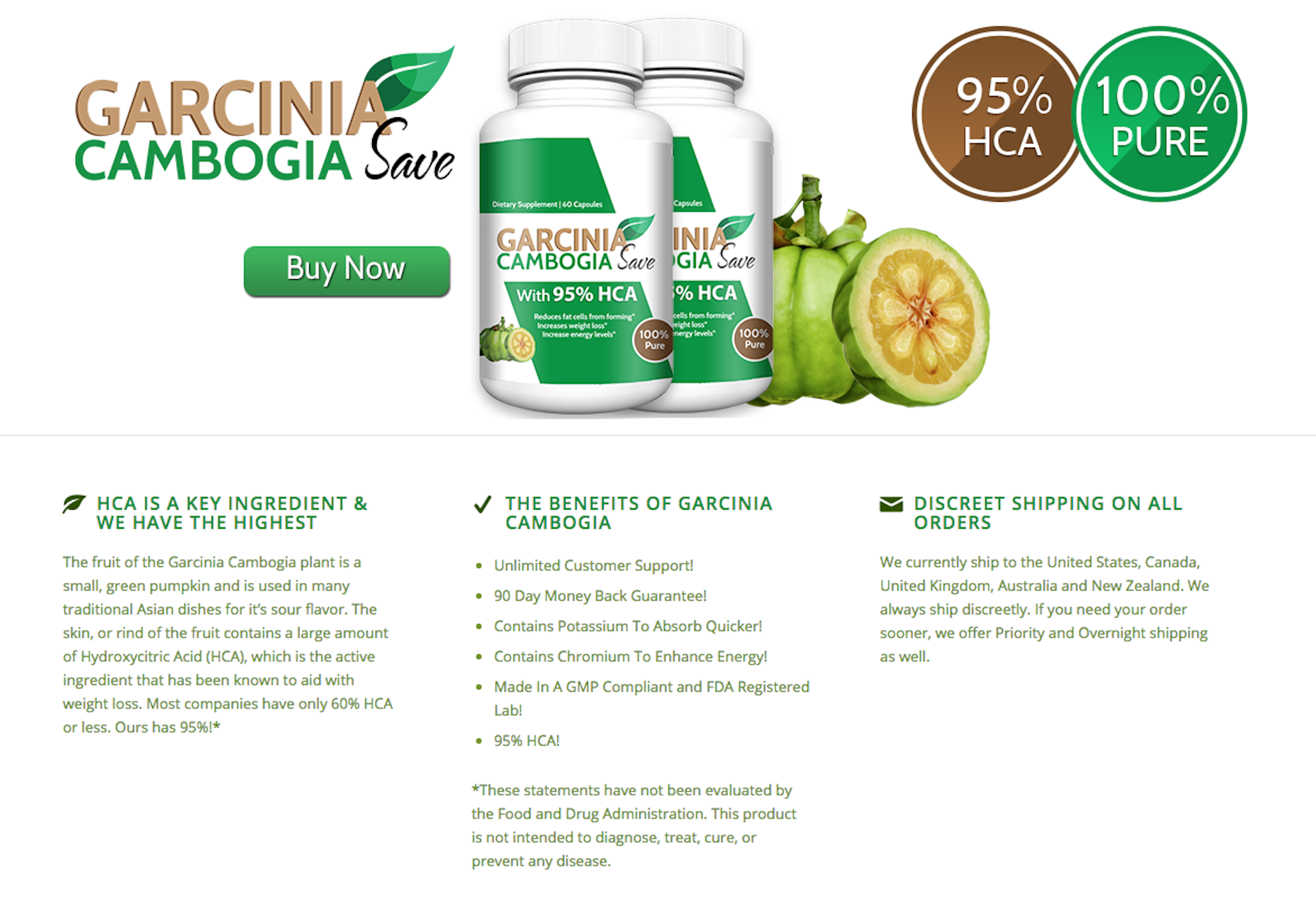
An exhibit in the lawsuit provided this screenshot of the now-deleted Amazon page from February 8, 2017:
Few details on refunds
The FTC has not said how many customers bought the product.
The proposed settlement includes a judgment of $12.85 million, but most of it would be suspended, and defendants would be ordered to pay the FTC only $50,000. The deal letting Cure Encapsulations and Jacobowitz off the hook for most of the financial penalty “is expressly premised upon the truthfulness, accuracy, and completeness of Defendants’ sworn financial statements and related documents,” the proposed settlement says.
All money paid to the commission will “be used for equitable relief, including consumer redress and any attendant expenses for the administration of any redress fund,” the proposed settlement says.
But the settlement says it’s possible that there won’t be any refunds if it turns out to be “impracticable.”
“If a representative of the Commission decides that direct redress to consumers is wholly or partially impracticable or money remains after redress is completed, the Commission may apply any remaining money for such other equitable relief (including consumer information remedies) as it determines to be reasonably related to Defendants’ practices alleged in the Complaint,” the settlement says. “Any money not used for such equitable relief is to be deposited to the US Treasury as disgorgement.”
“We don’t have scientific proof”
Officially, the defendants did not admit or deny any of the allegations. But they agreed to identify customers who bought the product on or after March 6, 2017, and send this exact email to them:
Subject Line: FTC says company deceptively advertised a product you bought
Dear Customer:
Our records show you bought our Quality Encapsulations Garcinia Cambogia Extract with HCA product. The Federal Trade Commission (FTC), the nation’s consumer protection agency, has charged us with deceptive advertising. To settle the case, we have agreed to send this notice to people who bought our product.
According to the FTC, we deceptively claimed–among other things–that our product causes significant weight loss, is a powerful appetite suppressant, and blocks the formation of new fat cells. We don’t have scientific proof for any of those claims.
You might want to look at the attached National Institutes of Health fact sheet on dietary supplements for weight loss. It discusses common ingredients in weight-loss dietary supplements, including garcinia cambogia. It says, “Garcinia cambogia has little to no effect on weight loss.” The fact sheet also addresses other topics, including whether weight-loss dietary supplements can be harmful and choosing a sensible approach to weight loss.
Sincerely,
Naftula Jacobowitz Chief Executive Officer Cure Encapsulations, Inc.
The emails would have to be sent within 30 days after the settlement is approved by the court.
The burgeoning field of complementary medicines, including weight-loss products, is now a billion-dollar industry. Every year, more people are spending disposable income on complementary and alternative medicines that may prove to have no benefit for our health.
Garcinia Cambogia is one such example. Marketed as a weight-loss pill, it has had an exponential rise in sales since it was featured on the Doctor Oz show.
Garcinia cambogia is the former scientific name of a native Southeast Asian plant, belonging to the family Clusiaceae, that bears a pumpkin-shaped fruit. The skin of the fruit contains the active ingredient, hydroxycitric acid (HCA). HCA inhibits an enzyme that produces fatty acid, thus suppressing fatty acid and the processing of cholesterol.
But does this mode of action translate to the weight-loss claims associated with it? Or is it just clever marketing convincing us this product helps us lose weight?
Double-blinded, randomised controlled trials are the gold standard of clinical study and whenever possible should be conducted to test the effectiveness of a treatment compared to a placebo. Weight-loss products should be assessed for a minimum of six months, with a further six-month follow-up period (12 months total).
There has never been a long-term study investigating the efficacy of Garcinia Cambogia. Most of the studies have been conducted in animals.
In fact, the majority of well-designed trials investigating the effect of this product on weight loss have found no effect that is of clinical relevance. In a 12-week double-blind, placebo-controlled trial conducted in humans, people receiving 3000mg of Garcinia Cambogia extract (1500mg of the active component HCA) per day lost the same amount of weight as the control group.
Another 12-week study with a four-week follow-up (16 weeks total) also found no greater weight-loss effect than for a placebo control group. For those studies where a statistically significant effect was reported, the weight loss was around one kilogram more than for those receiving a placebo pill.
Most importantly, the product safety profile of Garcinia Cambogia has been adequately tested and there appear to be no issues.
Some complementary medicines have been found to contribute to improved health outcomes, through increased efficacy and cost-effectiveness. However, if there is to be a role for such complementary and alternative weight-loss products and medicines, we must build upon the evidence to investigate whether these increasingly popular products are a viable treatment option.
A recent Obesity Australia and Price Waterhouse Coopers report found obesity cost Australia A$8.6 billion in 2011-2012, with the indirect costs far higher. We must establish whether complementary medicines have a role to play in preventing and treating obesity. If we take no action to reduce obesity rates, an additional 2.4 million people will become obese at a cost of $87.7 billion over 10 years.
Please visit this website if you’re interested in taking part in our clinical weight-loss trials on Garcinia Cambogia and other weight-loss supplements.